
COSTS for the overdue metro line for Dublin will escalate if
officials do not unite behind it, the head of national transport
infrastructure has warned.
Peter
Walsh, chief executive of Transport Infrastructure Ireland (TII), said
the scale of the largely underground project meant cooperation was
vital.
“It’s extremely large, it’s extremely
costly and it has the potential to disrupt the city in a way that other
projects have not. It will be very easy to load cost on to it,” he said.
“If the State and all of the agencies and
organs of the State do not commit to supporting the work towards the
delivery of this project, it will add costs.
“That is a distinct danger – that costs could be inflated simply by not coordinating to support it.”
Mr Walsh was speaking at a webinar hosted
by outgoing Italian ambassador to Dublin, Paolo Serpi, who said the
project was badly need.
Mr Serpi, a native of Rome, arranged the
event to share his thoughts on transport and planning in Ireland after
four years living here.
He was shocked by the hours people spent commuting here and said an underground metro was essential.
“The connections between Dublin and neighbouring towns are very complicated,” he said.
He said if an underground could be built in Rome, a “difficult and chaotic” city where digging was very difficult, the same could be done in Dublin.
“You have to convince the people. You have to read it in the
newspapers. You have to push the politicians who think there is a risk
not to be elected because the local people are not happy.
“We have done it in Rome. It’s not the
most ordered city in the world but at least it works. We pollute less
and we travel better.”
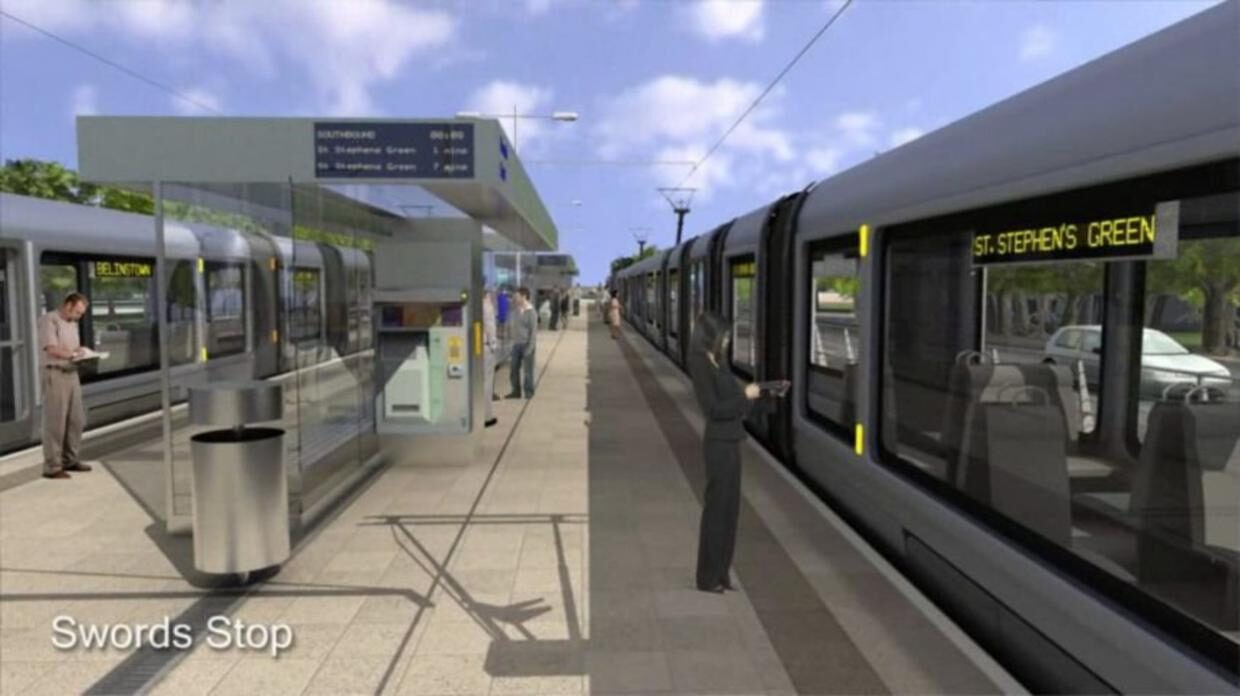
MetroLink is a 19km passenger rail line
set to run from near Ranelagh on the southside of the city to Swords on
the northside, serving Dublin Airport along the way.
A version of it was first proposed in
2005 with an anticipated completion date of 2012 but it did not proceed
beyond route and design investigations.
The current government recommitted to the
project but the National Transport Authority (NTA) must get government
approval of the business case for it – the costs and benefits – before
submitting a planning application.
An estimated cost of €3bn was put on the
project several years but updated figures, expected to be higher, have
not yet been made public.
Anne Graham, NTA chief executive, said pending government approval, the planning process would begin this year.
“We believe it will be operational in the early 2030s,” she said.
The event also heard from Francesco
Falco, chief commercial officer of Italian construction company Webuild
which has worked on 40 metro projects in 17 countries.
He highlighted the Cityringen project in Copenhagen as being of similar ambition to Dublin’s MetroLink.
The 15.5km underground line which opened in 2019, took eight years to build and cost €3bn.
“We excavated 31km of the streets. This was in downtown Copenhagen. Now it carries 240,000 passengers every day,” he said.
Source Independent.ie